The ONO card game is a colour-and-number matching game in which players compete to get rid of all the cards in their hands before anyone else. Its straightforward gameplay, colourful cards, and action-based mechanics make it suitable for family gatherings, children, and casual game nights.
If you already know how to play UNO, you will recognize much of the gameplay. Players take turns matching cards by colour or number, using special cards to change the direction of play, skip opponents, or make them draw additional cards.
However, ONO is sold in different editions, and the exact deck composition and some penalty rules can vary. This guide explains the commonly used ONO family card game rules, including the Fun Zone edition sold as a 2–10-player game, while identifying rules that should be checked against your particular deck’s instruction sheet.
Here is everything you need to understand before starting your first game in 2026.
What Is the ONO Card Game?
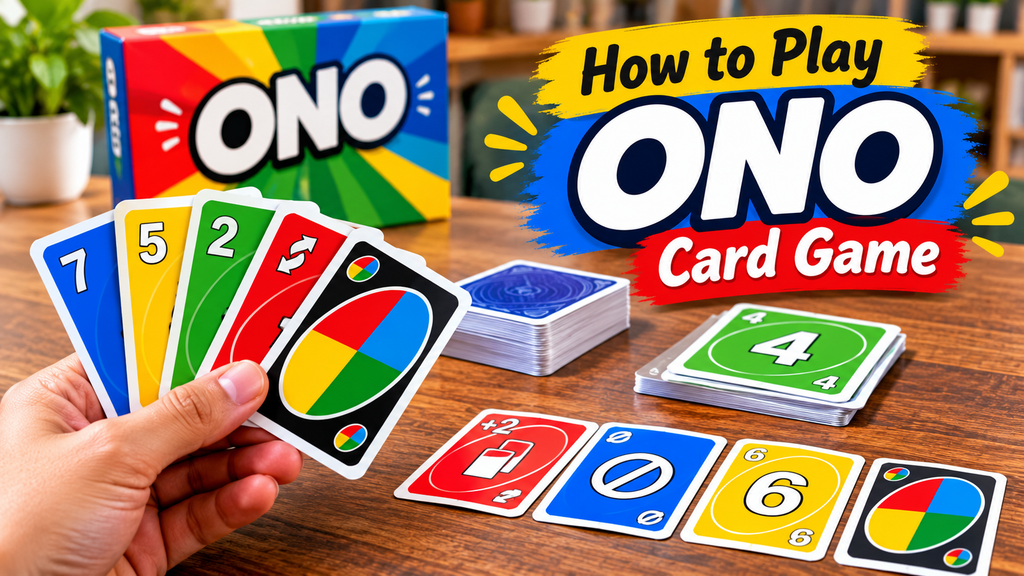
ONO is a shedding-style card game. The objective is to empty your hand before the other players by placing cards that match the colour or number of the card currently on the discard pile.
The game uses four main colours:
- Red
- Blue
- Green
- Yellow
Players also use special action cards that change the flow of the game. For example, a Skip card prevents the next player from taking a normal turn, while a Reverse card changes the direction of play.
A Wild card gives players an opportunity to choose the next colour, making it particularly useful when their current hand contains limited matching options.
The Fun Zone ONO family edition lists a recommended age of seven and above and a player range of two to ten. Its listed action cards include Skip, Reverse, +2, and four-colour Wild cards.
The main attraction is its accessibility. New players can understand the basic matching mechanic quickly, while experienced players can make decisions about when to use their action cards and which colours to keep.
The main objective: Be the first player to play every card in your hand.
What You Need to Play ONO
Before beginning, make sure you have a complete ONO deck and enough players to start a game.
For the Fun Zone edition, the listed player range is two to ten. Other ONO decks may specify different player limits, so check the packaging.
You need:
- One complete ONO card deck.
- At least two players.
- A flat playing surface.
- Enough space for a draw pile and discard pile.
- A clear understanding of the action cards.
Each player should have enough room to arrange their cards without revealing them to opponents.
The dealer should also make sure the deck is shuffled properly. A poorly shuffled deck can create an uneven starting distribution and make the opening rounds less interesting.
Understanding the Different Card Types
Most ONO family decks contain two main categories.
Number cards: These are the regular coloured cards used to match the number or colour on the discard pile.
Action cards: These introduce special effects that can change the direction of play, skip a player, force someone to draw cards, or change the active colour.
The exact number of cards and the composition of a deck can differ between manufacturers. Do not assume that every ONO-branded deck contains precisely the same cards.
How to Set Up the ONO Card Game
Setting up ONO is straightforward and should take only a few minutes.
Follow these steps before the first turn.
Choose a dealer.
Select one person to shuffle and distribute the cards. Players can choose a dealer randomly or agree on someone to handle the first round.
Shuffle the deck.
Mix all the cards thoroughly. Make sure number cards and special cards are distributed randomly.
Deal seven cards to each player.
The commonly documented ONO rules use seven starting cards per player. Distribute them face down so nobody can see another player’s hand.
Create the draw pile.
Place all remaining cards face down in the centre of the table. Players will take cards from this pile when they cannot make a play or choose to draw.
Start the discard pile.
Turn over the top card from the draw pile and place it face up beside it.
This becomes the first active card.
If the opening card is an action or Wild card, follow the instructions supplied with your particular deck. Different ONO editions may handle opening action cards differently.
Choose the starting player.
A common arrangement is for the player to the dealer’s left to begin, with turns continuing clockwise.
Once everything is ready, the first player can make a move.
How to Play ONO Card Game Step by Step
The basic gameplay revolves around matching the active card.
On your turn, look at the top card of the discard pile and check whether you have a card that matches its colour, number, or permitted symbol.
For example, if the active card is a red 6, you can generally play:
- Another red card with a different number.
- A 6 in another colour.
- An eligible action card that matches the active colour or symbol.
- A Wild card, which changes the active colour.
Once you play a card, the next player takes their turn unless the card’s special effect changes the turn order.
Playing a Matching Card
Matching cards is the central mechanic of ONO.
Imagine the discard pile currently shows a green 4.
You have the following cards:
- Green 8
- Red 4
- Yellow 2
- Blue Skip
- Wild
You can play the green 8 because it matches the colour. You can also play the red 4 because it matches the number.
The Wild card can also be played when its rules permit it.
However, the yellow 2 and blue Skip do not normally match the active card.
After playing a card, your hand becomes smaller. Continue looking for opportunities to remove cards while paying attention to the colours and action cards used by your opponents.
Drawing a Card
Sometimes you will not have a suitable card to play.
In that situation, the commonly documented basic rule is to draw one card from the draw pile.
After drawing, check whether the new card is playable.
If it matches the active colour, number, or permitted symbol, you may play it immediately. Otherwise, keep it in your hand and allow the next player to take their turn.
Some ONO editions or house rules require players to continue drawing until they find a playable card. This is not the same as the one-card drawing rule, so decide which version you are using before the game starts.
Using Wild Cards
Wild cards are particularly useful when you have very few matching options.
A regular Wild card allows you to choose the next colour.
For example, suppose the active card is a yellow 5, but your hand contains several blue cards and no other yellow cards.
Playing a Wild card lets you select blue as the next active colour.
This can help you create a better opportunity for your next turn while making it harder for opponents to use their current cards.
Wild cards are generally playable regardless of the active colour, but follow the instructions included with your deck.
Understanding ONO Special Cards
Special cards are what make ONO more than a simple number-matching game.
They allow players to interrupt opponents, change the direction of play, and force other players to collect additional cards.
Here is what the commonly included action cards do.
| Card | Function |
|---|---|
| Skip | The next player loses their turn. |
| Reverse | Changes the direction of play. |
| Draw Two (+2) | The next player draws two cards and misses their turn. |
| Wild | Allows the player to choose the next colour. |
| Wild Draw Four (+4) | Changes the colour and makes the next player draw four cards in editions that include it. |
Important: Not every ONO deck contains all five card types. The Fun Zone listing specifically identifies Skip, Reverse, +2, and four-colour Wild cards.
Skip Card
The Skip card prevents the next player from taking their regular turn.
For example, if play is moving clockwise between four players, placing a Skip card means the player immediately after you loses their turn.
The following player then continues.
Use this card when an opponent is close to finishing or when you want to prevent someone from using a favourable hand.
Reverse Card
A Reverse card changes the direction of the game.
If players are moving clockwise, the direction switches to counterclockwise. If the game is already moving counterclockwise, it switches back.
This can change which opponent plays immediately after you.
In a two-player game, some editions treat Reverse as a Skip card. Check your instruction sheet before applying that rule.
Draw Two (+2) Card
A +2 card forces the next player to collect two cards and lose their turn under the standard effect described for this type of deck.
For example, if you play a red +2, the next player must draw two cards before play continues.
This is useful when someone has only a few cards remaining.
Do not automatically assume that +2 cards can be stacked. Stacking is an edition-specific or house-rule mechanic, not something to introduce without agreement.
Wild Card
The Wild card lets you select the next active colour.
Suppose the current colour is green, but most of your remaining cards are red.
You can use the Wild card to change the colour to red.
This gives you a better chance of playing another card on your following turn.
Wild Draw Four (+4) Card
Some ONO editions include a Wild Draw Four card.
Its usual effect is to let the player select a colour while forcing the next player to draw four cards and lose their turn.
However, some decks impose restrictions on when this card can be played. Others may not include it at all.
Always follow the specific instructions printed in your ONO rulebook rather than assuming that every edition uses identical rules.
How to Win the ONO Card Game
Winning ONO requires you to play all your cards before the other players.
As the game progresses, your hand becomes smaller, and every decision becomes more important.
When you have only one card remaining, announce the required one-card warning according to your deck’s rules.
Some ONO rule sheets use the call “ONO!” and specify a penalty for forgetting. However, the exact penalty and challenge procedure can differ between editions.
Do not assume that every ONO deck uses the same penalty. Agree on the correct rule before playing.
Once a player successfully plays their final card, they win the round.
Playing for Points
Some groups prefer to play multiple rounds rather than ending the game after the first winner.
A commonly documented scoring variation awards points based on the cards remaining in opponents’ hands.
A typical scoring system uses:
- Number cards: Their printed numerical value.
- Action cards: 20 points each.
- Wild cards: 50 points each.
The winner of each round collects the points remaining in the other players’ hands.
Players can agree on a target score, such as 500 points, to determine the overall winner.
This is an optional scoring format, not a universal requirement for every ONO deck.
Important ONO Rules Beginners Should Know
Before playing, establish a few rules to avoid arguments during the game.
Only play cards that are permitted. A card must match the active colour, number, or eligible symbol unless it is a Wild card.
Keep your cards hidden. Other players should not see your hand. Watching opponents is useful, but revealing your cards removes much of the strategy.
Follow action-card effects. Skip, Reverse, and Draw Two cards change normal gameplay.
Agree on stacking rules. Some groups allow players to respond to a Draw Two with another Draw Two. Others require the affected player to draw the cards immediately.
Decide how drawing works. Establish whether players draw one card or continue drawing until they find a playable card.
Agree on the one-card warning. Make sure everyone knows what to say and what penalty applies if someone forgets.
Check the deck’s instructions. ONO editions can differ in deck composition and special-card rules.
These simple agreements make the game smoother, especially when beginners and experienced players are playing together.
Practical Strategies to Win More ONO Games
Although ONO involves luck, the way you manage your hand can influence your chances of winning.
A player who understands colour control, card timing, and opponents’ behaviour can make better decisions than someone who simply plays the first available card.
Keep track of your strongest colour.
Pay attention to which colour appears most frequently in your hand.
If you have several blue cards, try to keep blue active whenever possible. Wild cards become especially valuable when they allow you to return to a colour you can play.
Save Wild cards for difficult situations.
Using a Wild card immediately is not always the smartest decision.
If you can play a regular matching card, consider keeping the Wild card for a later turn when you have no suitable match.
However, if another player is close to winning, changing the colour to disrupt their plans may be more valuable.
Use Skip cards strategically.
A Skip card is most useful when the next player has very few cards remaining.
Preventing that player from taking a turn could give you the extra time needed to finish your own hand.
Watch the direction of play.
Reverse cards are not just defensive tools.
They can help you change which opponent plays next. Pay attention to players with smaller hands and consider whether changing direction will benefit you.
Avoid keeping too many difficult cards.
If the game uses point-based scoring, high-value action and Wild cards can become costly when another player finishes first.
Use them thoughtfully instead of holding every special card until the final moments.
Pay attention to what opponents draw.
If a player repeatedly draws when a particular colour is active, they may not have that colour.
You can use this information when deciding which colour to choose with a Wild card.
This is not guaranteed information because players can draw even when they have a playable card under certain rules. Nevertheless, observing patterns can help you make better decisions.
Common ONO Card Game Mistakes
Beginners often lose opportunities because they misunderstand special cards or make decisions without considering the next player.
Here are some mistakes worth avoiding.
- Forgetting the one-card announcement: This can result in a penalty if your edition requires it.
- Using Wild cards too early: You may need them more when your hand becomes difficult to manage.
- Ignoring opponents’ card counts: A player with one remaining card should receive more attention than someone holding six.
- Confusing stacking with standard rules: Do not assume that every +2 or +4 can be passed to another player.
- Forgetting Reverse effects: Changing direction can completely alter the order of upcoming turns.
- Playing without agreeing on house rules: Different ONO editions can use different penalties and drawing procedures.
The easiest way to avoid these problems is to establish the rules before dealing the first hand.
ONO vs. UNO: What Is the Difference?
ONO and UNO have very similar gameplay concepts.
Both are colour-and-number matching games in which players attempt to empty their hands using regular cards and special action cards.
However, they should not automatically be treated as identical products.
| Feature | ONO | UNO |
|---|---|---|
| Main objective | Empty your hand | Empty your hand |
| Basic matching | Colour and number | Colour and number |
| Action cards | Depends on edition | Depends on edition |
| Wild cards | Included in many editions | Included in standard editions |
| Manufacturer | Varies by ONO edition | Mattel |
| Rules | Check the specific ONO deck | Follow the relevant UNO rulebook |
The Fun Zone ONO edition, for example, is described as a separate colour-and-number matching family card game with Skip, Reverse, +2, and Wild cards.
UNO is Mattel’s established card game with its own official rules and product variations.
The practical takeaway is that someone familiar with UNO can usually understand the basic ONO gameplay quickly. Nevertheless, special-card rules and penalties should be checked rather than copied automatically from UNO.
Is ONO 99 the Same as the ONO Card Game?
No. ONO 99 is a different card game published by Mattel.
This distinction matters because people searching for ONO rules may encounter both names.
The regular ONO family card game focuses on matching colours and numbers while trying to empty your hand.
ONO 99 uses a running total. Players add or subtract values while trying to prevent the total from reaching 99 or higher.
Mattel describes ONO 99 as a game for two to six players in which the objective is to avoid making the running total reach 99. It also includes special cards that affect the total and turn order.
Therefore, the two games have different objectives and gameplay systems.
If your deck contains red, blue, green, and yellow matching cards with Skip, Reverse, and +2 symbols, you are most likely looking at the ONO family matching game discussed in this guide.
If your deck contains number-based total cards and special cards designed around a running score, check whether it is Mattel’s ONO 99.
Is ONO a Good Family and Party Card Game?
ONO is a practical choice for family gatherings and casual game nights because it does not require a board, complicated equipment, or extensive preparation.
The matching mechanic is easy to understand, and the special cards introduce enough unpredictability to keep players involved.
It can also help younger players practise:
- Recognizing colours and numbers.
- Taking turns.
- Following instructions.
- Making simple strategic decisions.
- Managing a small collection of cards.
The recommended age of the Fun Zone edition is seven and above. Younger children may need help understanding action cards and remembering turn order.
For larger groups, check the player limit printed on your particular box. The Fun Zone version lists support for up to ten players, although other ONO editions may have different limits.
The main limitation is that gameplay can become unpredictable when several action cards appear close together. Players who prefer longer strategic card games may find ONO relatively simple.
Nevertheless, its short learning curve makes it a convenient option for people who want a quick competitive activity without spending time learning complicated rules.
Final Thoughts
Learning how to play ONO card game is relatively easy once you understand the matching system, action cards, and turn order.
Start by dealing seven cards to each player, creating a draw pile, and placing one card face up to begin. Match the active colour or number, use special cards when they offer an advantage, and manage your remaining cards carefully.
The most important part is understanding your particular deck’s rules. ONO editions can differ in their card combinations, one-card penalties, and optional mechanics such as stacking.
For beginners, the best approach is to start with the basic matching rules and introduce optional variations only after everyone understands the game.
With a little practice, you can move beyond simply matching cards and start making smarter decisions about colours, action cards, and the players closest to winning.
FAQ: ONO Card Game Rules
How many cards does each player get in ONO?
Each player commonly receives seven cards at the beginning of the game. The remaining cards form the draw pile.
How many players can play ONO?
It depends on the edition. The Fun Zone ONO family card game lists support for two to ten players. Always check your deck’s packaging.
What is the main objective of ONO?
The objective is to become the first player to get rid of every card in your hand by matching colours, numbers, or permitted symbols.
Can you play a Wild card at any time in ONO?
In commonly documented versions, Wild cards can be played regardless of the active colour. However, check your particular edition’s instructions for restrictions.
What happens when you forget to say ONO?
Some rule sheets include a penalty for failing to announce when you have one card remaining. The exact penalty varies, so players should agree on the rule before starting.
Can you stack +2 cards in ONO?
Stacking is not a universal ONO rule. Some groups allow another +2 card to pass the penalty forward, while others require the affected player to draw two cards immediately.
Is ONO the same as UNO?
No. They are separate card games with similar colour-and-number matching gameplay. UNO is published by Mattel, while ONO is available in different editions.
Is ONO 99 different from the regular ONO card game?
Yes. Regular ONO focuses on matching cards and emptying your hand. Mattel’s ONO 99 revolves around maintaining a running total below 99
LEAVE A PIXEL ZINE COMMENT