The top ranked Daybreak games cover a surprisingly broad section of online gaming. Daybreak Game Company is best known for long-running MMORPGs and large-scale multiplayer experiences, but its portfolio also includes superhero action, competitive card gaming, fantasy online worlds, life-simulation elements, and massive-scale shooters.
That variety makes choosing a Daybreak game less straightforward than simply looking for the newest release. Some titles are built around decades of MMORPG history, while others focus on large battles, character progression, licensed fantasy worlds, or more relaxed social gameplay.
Daybreak currently identifies itself as a publisher of online games across several studios, including Dimensional Ink Games, Darkpaw Games, Standing Stone Games, and Singularity 6. Its current portfolio includes games such as EverQuest, EverQuest II, DC Universe Online, PlanetSide 2, The Lord of the Rings Online, Dungeons & Dragons Online, Palia, and Magic: The Gathering Online.
There is no official Daybreak ranking that determines which game is number one. The order here is an editorial comparison based on longevity, distinctiveness, gameplay depth, ongoing relevance, and the kind of experience each game offers.
What Makes a Daybreak Game Stand Out?
Daybreak’s games have one major characteristic in common: long-term online progression.
These are not generally games designed to be finished over a weekend. Their appeal comes from systems that encourage players to return repeatedly. Characters develop over time, worlds evolve, communities form around servers or guilds, and progression can continue long after the introductory hours.
The company’s own description emphasizes massively multiplayer online games and emergent gameplay. Its portfolio demonstrates that philosophy across several genres.
For this list, several factors matter:
- Gameplay identity: Does the game offer something distinctive?
- Longevity: Has it maintained a meaningful presence over time?
- Depth: Are there systems that reward continued play?
- Community: Does multiplayer interaction meaningfully contribute to the experience?
- Accessibility: Can a new player understand what the game is trying to do?
- Current relevance: Is the title still represented in Daybreak’s current ecosystem?
- Genre importance: Did the game contribute something notable to its category?
With those criteria in mind, here are the top selections.
Top Ranked Daybreak Games
1. EverQuest
Few games define Daybreak’s MMORPG heritage more clearly than EverQuest.
Originally launched in 1999, EverQuest helped establish many of the conventions that players now associate with traditional massively multiplayer RPGs. Its world revolves around persistent character progression, group-based combat, exploration, quests, classes, equipment, and social interaction.
The important distinction is that EverQuest does not attempt to simplify its systems into a streamlined modern RPG.
Its appeal comes from depth.
Players can spend substantial time developing characters, learning zones, forming groups, completing quests, improving equipment, and participating in guild activities. The game’s long history also means its world has accumulated a tremendous amount of content.
The official EverQuest site continues to describe the game around massive-world exploration, quests, dungeons, and challenging enemies, and it continues to publish updates and events in 2026.
For a player who wants a traditional MMORPG with an unusually long history, EverQuest remains one of the most important games in Daybreak’s portfolio.
Best for: Traditional MMORPG fans, long-term progression, group play, and players who enjoy complex systems.
2. PlanetSide 2
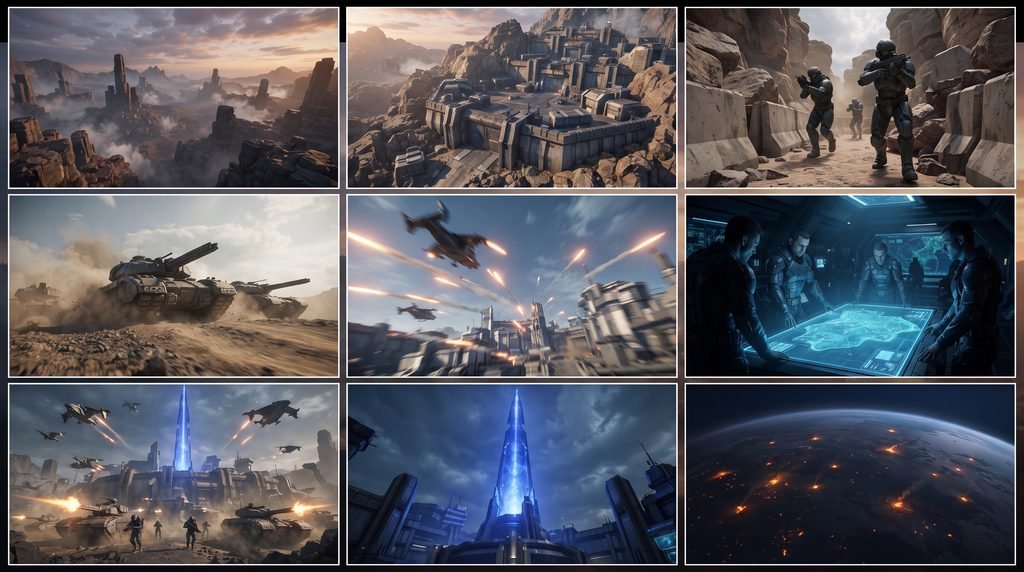
PlanetSide 2 occupies a completely different space.
Instead of fantasy quests and dungeon progression, it delivers large-scale first-person warfare across enormous battlefields. The official Steam description emphasizes planetary warfare involving infantry, ground vehicles, aircraft, and coordinated teamwork.
Its defining feature is scale.
A normal multiplayer shooter usually organizes players into relatively small teams. PlanetSide 2 can make the battlefield itself feel like the game. Bases become objectives, vehicles alter the flow of combat, and infantry units can be caught in battles involving players from multiple factions.
That creates a different type of FPS strategy.
Positioning, logistics, vehicle support, squad coordination, and territory control can matter as much as individual shooting skill.
The game’s long-running development history also continues into 2026. Daybreak’s official PlanetSide 2 announcements include recent community and development updates, including a move toward Discord-based community communication.
Best for: Large-scale FPS battles, teamwork, vehicles, territorial warfare, and players who want something different from conventional shooters.
3. DC Universe Online
DC Universe Online combines superhero action with MMORPG progression.
Instead of controlling an established hero throughout the entire game, the concept allows players to create and develop their own character within the DC universe. That creates an interesting balance between recognizable comic-book settings and personal character progression.
Combat is another important part of its identity.
Rather than relying exclusively on traditional MMORPG ability rotations, DC Universe Online places significant emphasis on action-oriented combat. Daybreak describes it as a free-to-play action game available across PC, PlayStation, Xbox, and Nintendo Switch systems.
The licensed setting gives the game another advantage: players can interact with a world built around familiar superhero mythology while still developing their own character.
For someone who enjoys superheroes but wants more than a single-player campaign, DC Universe Online offers a persistent online alternative.
Best for: Superhero fans, action-oriented MMORPG players, character customization, and online cooperative content.
4. The Lord of the Rings Online
Few fantasy settings are as recognizable as Middle-earth, and The Lord of the Rings Online uses that setting as the foundation for a traditional MMORPG.
The appeal here is less about fast competitive combat and more about exploration, character development, quests, storytelling, and the atmosphere of Tolkien’s world.
Daybreak currently lists The Lord of the Rings Online among the games published through its portfolio, with Standing Stone Games identified as the studio responsible for its development.
That distinction is worth understanding. Daybreak’s portfolio is not made entirely of games developed directly by one internal studio. The company works with multiple studios and franchises.
For players who value world-building and fantasy exploration, LOTRO occupies an important position within that broader portfolio.
Best for: Tolkien fans, fantasy MMORPG players, exploration, quests, and story-driven online worlds.
5. EverQuest II
EverQuest II offers another interpretation of the traditional MMORPG formula.
Where the original EverQuest represents an older-school approach to massively multiplayer gaming, EverQuest II developed its own systems, presentation, progression structure, and world.
Daybreak’s All Access information continues to include EverQuest II among its participating games, describing it around deep MMORPG features, heritage, and community.
The important reason to consider EverQuest II separately from the original is that these are not simply two versions of the same game. They represent different approaches to the EverQuest formula.
Players interested in character development, group content, fantasy exploration, crafting, housing, guilds, and long-term MMORPG progression can find plenty to investigate.
Best for: MMORPG veterans, fantasy progression, guild play, crafting, and players who enjoy extensive online systems.
6. Dungeons & Dragons Online
Dungeons & Dragons Online brings tabletop RPG concepts into an online action-RPG structure.
That combination is its biggest attraction.
Character development is strongly tied to the D&D tradition, while quests and combat give players an interactive way to experience fantasy scenarios with other players.
Daybreak currently lists Dungeons & Dragons Online among its portfolio and identifies Standing Stone Games as the studio behind it.
Players who already understand tabletop concepts can appreciate the connection between character-building decisions and online gameplay. Newcomers, meanwhile, get an opportunity to experience a digital interpretation of D&D-style adventuring without needing a physical gaming table.
Its emphasis on quests and character customization makes it particularly interesting for players who care about RPG mechanics.
Best for: D&D fans, character-build enthusiasts, cooperative RPG players, and fantasy questing.
7. Palia
Palia represents one of the more unusual directions in the wider Daybreak portfolio.
Instead of focusing primarily on traditional MMORPG combat, Palia emphasizes a more relaxed online world built around activities such as exploration, gathering, crafting, social interaction, and home customization.
Daybreak currently lists Palia among its games and identifies Singularity 6 as its Los Angeles-based development studio.
That makes Palia particularly relevant for players who like online worlds but are not necessarily looking for constant combat.
Its appeal comes from the social and creative side of multiplayer gaming. Players can approach the world at their own pace and spend time developing their personal space and participating in non-combat activities.
It also demonstrates that Daybreak’s portfolio is not limited to the classic MMORPG formula.
Best for: Relaxed multiplayer, social gaming, crafting, exploration, and players who prefer creative progression.
8. Magic: The Gathering Online
Magic: The Gathering Online is a different kind of online game altogether.
Rather than presenting an enormous persistent 3D world, it brings the established Magic card-game experience into a digital environment.
Daybreak’s current game listings include Magic: The Gathering Online, demonstrating that the company’s portfolio extends beyond MMORPGs and large-scale shooters.
The strength of MTGO is therefore not conventional character progression. Its depth comes from deck construction, card interactions, strategy, rules knowledge, and competitive decision-making.
For experienced Magic players, that makes it fundamentally different from the other games on this list.
It also demonstrates an important characteristic of Daybreak’s catalog: the company has maintained a portfolio that reaches across several distinct forms of online gaming rather than concentrating entirely on one genre.
Best for: Trading-card-game enthusiasts, strategic players, deck builders, and competitive card gaming.
9. H1Z1
H1Z1 occupies an important place in Daybreak’s history, particularly because of its connection to the development of online survival and battle-royale-style gaming.
Daybreak previously divided the H1Z1 concept into separate games, including H1Z1: Just Survive and H1Z1: King of the Kill. The company’s 2016 announcement described Just Survive as an open-world zombie survival experience and King of the Kill as a large-scale competitive shooter.
That history makes H1Z1 significant even though the current Daybreak portfolio has evolved considerably.
The game demonstrates how online multiplayer genres can change quickly. Survival mechanics, scavenging, crafting, open-world threats, and player-versus-player combat all became important parts of the broader online gaming conversation.
H1Z1 is therefore particularly useful when examining Daybreak’s historical influence rather than simply choosing a game based on its current position.
Best for: Players interested in survival-game history, competitive multiplayer, and Daybreak’s earlier online experiments.
10. EverQuest Legends
EverQuest Legends is a newer addition to Daybreak’s current listed portfolio and represents another part of the company’s ongoing EverQuest ecosystem. Daybreak’s official website currently lists EverQuest Legends among its games.
Because it is newer within the company’s current portfolio than the established EverQuest titles, its significance should be viewed differently from the decades-long history of the original MMORPG.
Its inclusion is nevertheless useful for anyone researching the current Daybreak catalog rather than looking only at historical hits.
For players following the broader EverQuest ecosystem, it is worth keeping an eye on how this newer offering fits into Daybreak’s continuing expansion of the franchise.
Best for: Players exploring newer entries in the EverQuest ecosystem and fans following Daybreak’s current catalog.
How the Daybreak Games Compare
The biggest difference between these games is not simply graphics, age, or platform. It is how each game uses online multiplayer.
| Game | Main Genre | Core Appeal | Best For |
|---|---|---|---|
| EverQuest | MMORPG | Deep progression and exploration | Traditional MMO fans |
| PlanetSide 2 | MMOFPS | Massive-scale warfare | FPS and teamwork fans |
| DC Universe Online | Action MMORPG | Superhero combat and character creation | DC fans |
| The Lord of the Rings Online | MMORPG | Middle-earth exploration | Tolkien fans |
| EverQuest II | MMORPG | Deep systems and progression | MMO veterans |
| Dungeons & Dragons Online | Online RPG | Character builds and quests | D&D players |
| Palia | Online social/life sim | Relaxed multiplayer and crafting | Casual/social players |
| Magic: The Gathering Online | Digital TCG | Deck strategy and competition | Card-game players |
| H1Z1 | Survival/shooter | PvP and survival history | Competitive multiplayer fans |
| EverQuest Legends | Online RPG | EverQuest ecosystem | Franchise followers |
This is why there is no universal answer to which Daybreak game is best.
A player searching for a traditional MMORPG has very different requirements from someone searching for an MMOFPS. Likewise, someone interested in relaxed social gameplay may have little interest in a decades-old raid-focused MMORPG.
Which Daybreak Game Should You Play?
The simplest way to narrow the choices is to start with the type of gameplay you actually want.
Choose EverQuest if you want a classic MMORPG built around long-term character development, quests, groups, and a persistent fantasy world.
Choose PlanetSide 2 if large-scale FPS combat sounds more appealing than dungeon crawling. Its combination of infantry, vehicles, aircraft, factions, and territorial battles gives it a distinctive multiplayer structure.
Choose DC Universe Online if superhero customization and action-oriented MMORPG combat are the priority.
Choose The Lord of the Rings Online if the setting itself is a major reason you play fantasy games.
Choose EverQuest II if you want a deep fantasy MMO but prefer its particular interpretation of the EverQuest formula.
Choose Dungeons & Dragons Online if character builds and tabletop-inspired fantasy mechanics interest you.
Choose Palia if you want an online world focused more heavily on social activities, crafting, exploration, and personal spaces.
Choose Magic: The Gathering Online if strategic card games are more appealing than persistent 3D worlds.
The important point is that these games should not all be judged using the same criteria.
Why Daybreak’s Portfolio Has Lasted
Long-running online games have a difficult problem that ordinary single-player games do not: they need a reason for players to keep returning.
Daybreak’s portfolio has approached that challenge in several ways.
EverQuest relies heavily on progression, social organization, content, and its enormous historical foundation. PlanetSide 2 creates replayability through unpredictable multiplayer battles. DC Universe Online combines an established fictional universe with ongoing character development.
Other games approach retention differently.
Palia emphasizes social and creative activities. Magic: The Gathering Online is driven by strategic depth and the enormous complexity of a competitive card game. The Lord of the Rings Online benefits from the strength and longevity of its licensed setting.
This variety helps explain why Daybreak’s portfolio has remained relevant across different eras of PC and online gaming.
The company itself describes its business around online entertainment and multiple studios, rather than a single unified game formula.
Another useful factor is continued support.
Daybreak’s official announcements show ongoing activity around its portfolio, including 2026 updates and announcements for PlanetSide 2 and the company’s broader game lineup.
That does not mean every title receives identical levels of development or has the same player population. It simply demonstrates that the company’s current portfolio remains active rather than existing solely as a collection of historical games.
Final Thoughts
The top ranked Daybreak games span much more than traditional MMORPGs.
EverQuest represents the company’s deepest MMORPG heritage. PlanetSide 2 offers large-scale FPS warfare that remains difficult to replicate. DC Universe Online combines superhero identity with persistent online progression, while The Lord of the Rings Online and Dungeons & Dragons Online use established fantasy worlds in very different ways.
EverQuest II continues the company’s MMORPG tradition from another angle, while Palia shows a more relaxed approach to online worlds. Magic: The Gathering Online expands the portfolio into strategic card gaming, and H1Z1 remains an important part of Daybreak’s multiplayer history.
The right choice ultimately depends on the kind of online experience you want rather than a universal ranking. Daybreak’s strength as a publisher is precisely that its portfolio gives players several different ways to approach persistent multiplayer gaming.
FAQ
What are the top ranked Daybreak games?
Notable Daybreak games include EverQuest, PlanetSide 2, DC Universe Online, The Lord of the Rings Online, EverQuest II, Dungeons & Dragons Online, Palia, and Magic: The Gathering Online. Daybreak does not publish an official overall ranking, so rankings depend on the criteria being used.
What is Daybreak Games best known for?
Daybreak is particularly associated with long-running online games and MMORPGs, including EverQuest, EverQuest II, and DC Universe Online, while PlanetSide 2 is known for its large-scale MMOFPS battles.
Is EverQuest still active?
Yes. The official EverQuest website continues to publish news, events, guides, and update information in 2026, showing that the game remains an active part of Daybreak’s portfolio.
Is PlanetSide 2 still supported?
Daybreak continues to publish PlanetSide 2 announcements. Its official announcements page includes 2026 community updates and earlier development communications.
Which Daybreak game is best for FPS players?
PlanetSide 2 is the clearest choice for players specifically looking for a Daybreak MMOFPS. Its gameplay combines infantry combat with ground and air vehicles and large-scale territorial battles.
Which Daybreak game is best for superhero fans?
DC Universe Online is the most directly suited to superhero fans because it combines the DC setting with persistent online character development and action-oriented combat. Daybreak currently lists it as a free-to-play online action game across PC and multiple consoles.
Does Daybreak only make MMORPGs?
No. Although MMORPGs are a major part of the company’s identity, its portfolio also includes PlanetSide 2, Magic: The Gathering Online, Palia, and other online experiences.
Are all Daybreak games developed directly by Daybreak?
No. Daybreak’s current structure includes multiple studios. Its official company information identifies studios such as Dimensional Ink Games, Darkpaw Games, Standing Stone Games, and Singularity 6, each associated with different franchises
LEAVE A PIXEL ZINE COMMENT