What Does Technology Play Gaming Mean?
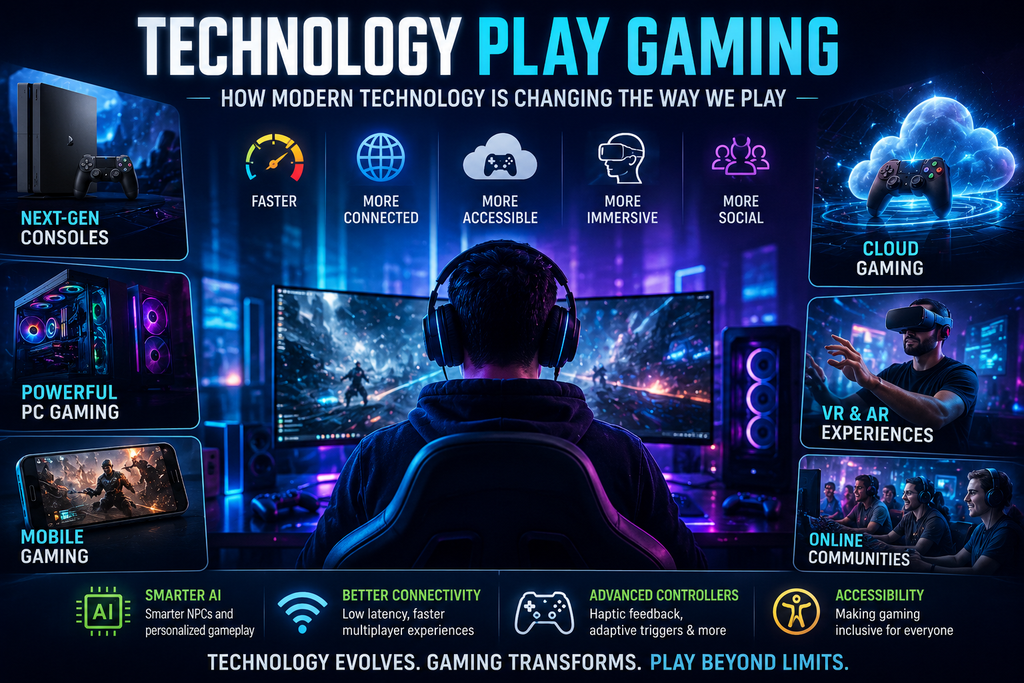
At its simplest, technology play gaming describes the intersection of digital technology and interactive play. It includes the hardware used to play games, the software that powers them, and the services that connect players, creators, and communities.
The idea covers a wide range of experiences:
- Console gaming on dedicated hardware
- PC gaming with customizable components
- Mobile gaming on smartphones and tablets
- Cloud gaming that streams games over the internet
- Virtual and mixed reality experiences
- Online multiplayer and social platforms
- AI assisted game development and adaptive systems
- Accessibility technology that helps more people play
The biggest change is not that one technology has replaced another. Modern gaming is increasingly multi platform. A player might discover a game on a phone, play it on a PC, join friends on a console, and continue through a cloud-enabled handheld device.
How Technology Has Changed the Way People Play Games
Gaming technology has steadily removed barriers between players and games. Physical discs and cartridges remain relevant, but digital stores, subscriptions, cross platform services, and cloud streaming have created more ways to access the same hobby.
The result is greater flexibility, but also more choices. A new player no longer needs to ask only, “Which console should I buy?” They may also need to consider internet quality, subscriptions, storage space, cross play support, account ecosystems, and the devices their friends already use.
From Physical Media to Digital Libraries
For decades, buying a game generally meant owning a physical cartridge, disc, or other tangible format. Digital storefronts changed that relationship by allowing players to purchase, download, and manage libraries directly from connected devices.
The practical benefit is convenience. Players can switch between games without changing physical media, receive updates automatically, and access purchases through an account on compatible hardware.
There are trade offs, however. Digital ownership is tied more closely to platform ecosystems and licensing arrangements. Players should understand the difference between owning a physical item and receiving a digital license to access software under a platform’s terms.
Cross Platform Gaming Makes Communities More Connected
Technology has also changed who can play together.
Cross play allows compatible players on different systems to participate in the same game environment. A group of friends may no longer need identical hardware to play together.
This has changed multiplayer design in meaningful ways. Developers increasingly consider account systems, matchmaking, control methods, performance differences, and communication tools across several platforms rather than designing exclusively for one machine.
Cross play is not available in every game, and implementation varies, but it has become an important expectation for many multiplayer communities.
The Main Technologies Shaping Modern Gaming
Several technologies now influence the gaming experience, and each solves a different problem.
Console Technology
Consoles remain a straightforward option for players who want dedicated gaming hardware with a relatively simple setup.
A console ecosystem generally combines hardware, an operating system, a digital store, online services, and exclusive or optimized games. The advantage is consistency: developers know the technical specifications they are targeting.
Modern consoles have also become broader entertainment devices, supporting digital libraries, online multiplayer, subscriptions, remote features, and streaming services.
For many players, the main question is no longer which console is objectively best. The better choice depends on preferred games, budget, friends, available services, and the features that matter most.
PC Gaming and Customization
PC gaming offers a different kind of flexibility.
A gaming PC can be upgraded over time, configured for different performance targets, and used for activities beyond gaming. Players can adjust graphics settings, choose from multiple digital storefronts, use different controllers or peripherals, and access a wide variety of independent and community created content.
The downside is complexity. Hardware compatibility, graphics settings, driver updates, and system requirements can require more attention than a typical console.
For players who enjoy customization, that complexity is part of the appeal. For those who simply want to turn on a device and start playing, a dedicated console or handheld may be more convenient.
Mobile Gaming
Smartphones have made gaming accessible to an enormous global audience because the hardware is already part of daily life.
Mobile gaming includes everything from short puzzle games to large multiplayer experiences. Touch controls, portability, and app store distribution make games easy to access, while controller support and improved mobile hardware have expanded what phones and tablets can run.
The mobile market is also evolving in how games generate revenue. Sensor Tower’s 2026 gaming report describes a market where mobile downloads have been shrinking while revenue has remained steadier, placing greater emphasis on monetization and longterm engagement.
For players, this means it is worth paying attention to a game’s business model. A free download can still involve optional purchases, subscriptions, advertisements, or other monetization systems.
Cloud Gaming
Cloud gaming is one of the clearest examples of technology changing the definition of a gaming device.
Instead of processing every part of a game locally, a remote server handles much of the computing work and streams the result to a compatible device. Player inputs are sent back over the network.
This can reduce the need for large local downloads and high end hardware, although the quality of the experience depends heavily on internet performance and service availability.
PlayStation’s cloud streaming service, for example, allows eligible PlayStation Plus Premium members to stream select PS5 games on supported devices. The service’s requirements show why connectivity remains central to cloud gaming: PlayStation lists minimum and recommended connection speeds that vary by streaming resolution.
Cloud gaming is not automatically better than local hardware. A powerful local device may provide more predictable performance, particularly where internet connections are inconsistent. The technology is most useful when convenience and flexibility matter more than complete independence from a network.
How Handheld Gaming Is Changing
Handheld gaming is no longer limited to simplified versions of console games.
Modern portable devices can run native games, remotely connect to a console, or access games through cloud streaming. This gives players more options for continuing the same gaming library in different locations.
A good example is PlayStation Portal. Its software and cloud features have continued to expand, including cloud streaming support for select games and later improvements to streaming quality and usability. A March 2026 update introduced a 1080p High Quality mode for compatible Remote Play and Cloud Streaming sessions.
The larger trend is more important than any individual device: gaming is becoming less tied to one screen in one room.
Virtual Reality and Mixed Reality
Virtual reality changes gaming by placing the player inside a simulated environment rather than presenting that environment on a traditional flat display.
VR can create a strong sense of presence because players interact through head movement, hand tracking, controllers, or other motion based systems.
Mixed reality takes a related approach by combining digital elements with the player’s physical environment.
These technologies are particularly effective for:
- Simulation games
- Rhythm and fitness games
- Interactive puzzles
- Firstperson experiences
- Social virtual spaces
- Training and educational applications
VR also has limitations. Some players experience motion discomfort, hardware can be expensive, and the physical space required for certain games may be inconvenient.
For that reason, VR is best understood as an additional way to play rather than a complete replacement for traditional gaming.
AI and the Future of Interactive Play
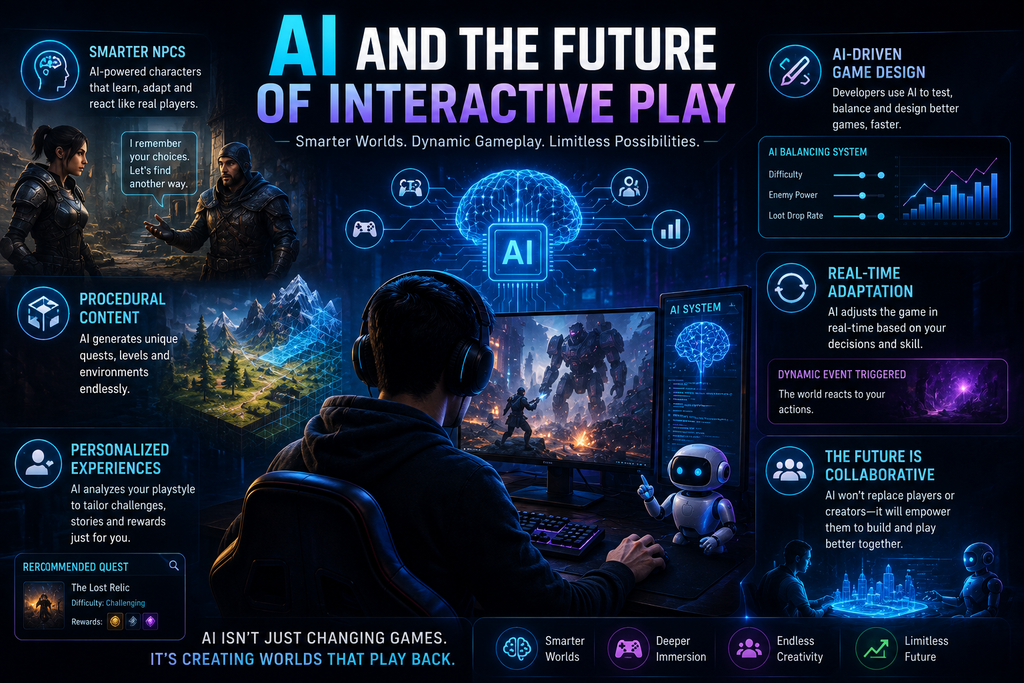
Artificial intelligence is becoming part of gaming in several different ways.
Developers can use AI assisted tools during production for tasks such as prototyping, testing, animation support, dialogue systems, and content workflows. Games may also use machine learning or AI systems to adapt behavior, improve matchmaking, or create more responsive non player characters.
The technology raises important creative questions.
AI generated content can speed up some workflows, but faster production does not automatically create a better game. Players still care about design, pacing, technical quality, artistic direction, and meaningful interaction.
There are also concerns surrounding transparency, intellectual property, training data, employment, and the quality of generated content.
The most useful way to evaluate AI in gaming is to focus on the result. Does the technology create a better experience for the player, or is it simply adding complexity without meaningful value?
Technology Is Also Changing How Games Are Made
Gaming technology affects developers as much as players.
Modern development tools allow smaller teams to create games that can reach a global audience through digital distribution. Game engines, online storefronts, creator platforms, social media, and community services have lowered some of the traditional barriers to publishing.
Independent developers still face major challenges, particularly discoverability. Thousands of games compete for attention, and visibility can be difficult without marketing resources or an established community.
Still, accessible development and distribution technology has created more room for niche ideas. A game does not always need the budget of a major publisher to find an audience.
This matters because technological progress is not only about better graphics. It can also determine who gets to create games and how those games reach players.
Social Technology and the Rise of Gaming Communities
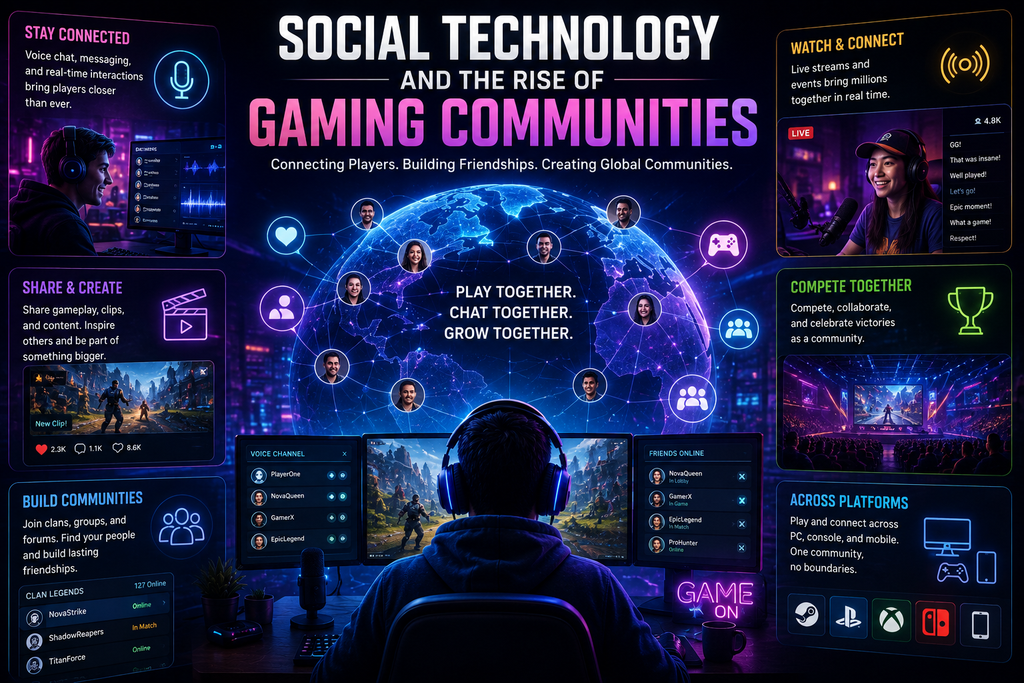
Gaming has become increasingly social, even for players who prefer single player experiences.
Players discuss games through forums livestreams videos voice chat social networks and community platforms. A game’s life can extend far beyond the time spent actively playing it.
Technology supports communities through:
- Multiplayer matchmaking
- Voice and text communication
- User generated content
- Livestreaming
- Competitive events
- Mods
- Shared screenshots and video clips
- Cross platform friend systems
This has also changed how games are discovered. A player may first encounter a game through a creator, a livestream, a short video, or a friends recommendation rather than traditional advertising.
Community feedback can also influence game development after release. Live service games, in particular, can change substantially through updates and player response.
Accessibility Technology Makes Gaming More Inclusive
One of the most meaningful areas of technology play gaming is accessibility.
Modern gaming systems can offer options such as:
- Customizable controls
- Button remapping
- Subtitles and caption settings
- Screen readers
- Color and contrast adjustments
- Adjustable text sizes
- Audio cues
- Difficulty and assistance options
- Alternative input devices
Accessibility is not a single feature. Different players have different needs, and useful design gives people more control over how they interact with a game.
Technology can make a game visually impressive, but accessibility determines whether more people can actually participate in the experience.
Practical Advice: How to Choose the Right Gaming Technology
The best gaming technology depends on the player.
Instead of beginning with the most powerful or expensive device, start with how and where the games will actually be played.
Consider Your Preferred Games First
Game libraries should influence hardware decisions.
A player who primarily enjoys competitive shooters may have different priorities from someone who prefers strategy games, role-playing games, independent titles, or VR experiences.
Make a list of the games you want to play and check:
- Which platforms support them
- Whether cross play is available
- Whether online subscriptions are required
- What hardware specifications are recommended
- Whether cloud access is available in your region
Think About Your Internet Connection
Internet quality matters more than ever because updates, multiplayer, digital downloads, and cloud streaming all depend on connectivity.
For cloud gaming specifically, advertised internet speed is not the only factor. Stability, latency, WiFi quality, and network congestion can affect the experience.
If your connection is inconsistent, local hardware and downloadable games may provide a more reliable experience.
Avoid Paying for Features You Will Not Use
A powerful graphics card, premium subscription, VR headset, or cloud service can be valuable for the right player. It can also be an unnecessary expense.
Ask practical questions:
- How many hours do I actually play?
- Do I travel frequently?
- Do I need portability?
- Do my friends play on a specific platform?
- Do I enjoy competitive gaming?
- Will I use VR regularly?
- Is a subscription better value than buying individual games?
The goal is not to own every new technology. It is to build a setup that matches your habits.
What Technology Play Gaming May Look Like Next
The future of gaming will probably involve greater flexibility rather than one platform replacing everything else.
Local hardware will continue to matter for performance and ownership preferences. Cloud services can expand access and portability. Mobile devices will remain an important entry point. PCs will continue to offer customization, while VR and mixed reality may create experiences that traditional screens cannot easily replicate.
The most significant development may be the continued blending of these categories.
A game can already exist across console, PC, mobile, and cloud ecosystems. Players increasingly expect saved progress, friends, and content to move with them.
That does not mean every technology will succeed or become essential. Gaming history is full of impressive ideas that struggled because they were too expensive, inconvenient, or poorly matched to what players actually wanted.
The technologies that last are usually the ones that solve a genuine problem.
Frequently Asked Questions
What is technology play gaming?
Technology play gaming refers to the use of digital technology to create, access, and experience interactive games. It includes consoles, PCs, smartphones, cloud gaming, VR, online multiplayer, accessibility features, and other technologies that shape how people play.
How has technology changed gaming?
Technology has made games more accessible across different devices, improved graphics and performance, enabled online multiplayer, expanded digital distribution, and introduced options such as cloud streaming and virtual reality.
Is cloud gaming better than traditional gaming?
Not necessarily. Cloud gaming offers convenience and can reduce the need for powerful local hardware, but it depends on a stable internet connection. Traditional local gaming can provide more consistent performance when connectivity is limited.
What technology is most important for modern gaming?
There is no single answer. For some players, a gaming PC provides the most flexibility. Others may prefer a console, smartphone, handheld device, or cloud service. The best technology depends on preferred games, budget, location, internet quality, and playing habits.
How is AI affecting video games?
AI can assist with game development, testing, adaptive systems, and other production processes. Its longterm value will depend on how responsibly developers use it and whether it improves the actual player experience.
Will VR replace consoles and PCs?
VR is unlikely to completely replace traditional gaming in the near future. It offers experiences that standard displays cannot replicate, but factors such as cost, comfort, available space, and player preference mean that conventional gaming platforms will remain important.
Final Thoughts
Technology play gaming is ultimately about giving players more ways to interact with games. Consoles offer simplicity, PCs provide flexibility, mobile devices make gaming highly accessible, cloud services increase portability, and VR creates new forms of immersion.
The most useful technology is not always the newest or most expensive. A great gaming setup is one that fits the games you enjoy, the people you play with, your budget, and the way you actually spend your time.
As gaming technology continues to evolve, the boundaries between platforms will likely become less rigid. Players will increasingly expect their games, communities, and progress to move across devices. That shift may prove more important than any single console, headset, or hardware upgrade: technology is gradually making the act of playing more flexible, connected, and personal.
LEAVE A PIXEL ZINE COMMENT