Finding a game that works with only two people can be harder than it sounds. Many party games rely on a group, while others become repetitive when there are only two players. The best drinking games for two are simple to explain, flexible enough to suit different personalities, and entertaining even when nobody wants to drink.
This guide to drinking games for two reviews compares seven familiar game formats for couples, friends, or roommates who want a relaxed game night. Rather than ranking games by how much alcohol they involve, the focus is on conversation, creativity, friendly competition, setup time, and replay value.
You do not need to drink alcohol to participate. Water, soft drinks, mocktails, or points can replace alcoholic drinks in every game below. If you choose to drink, keep it optional, avoid pressure or drinking penalties, and stop whenever you want.
How to Choose a Drinking Game for Two
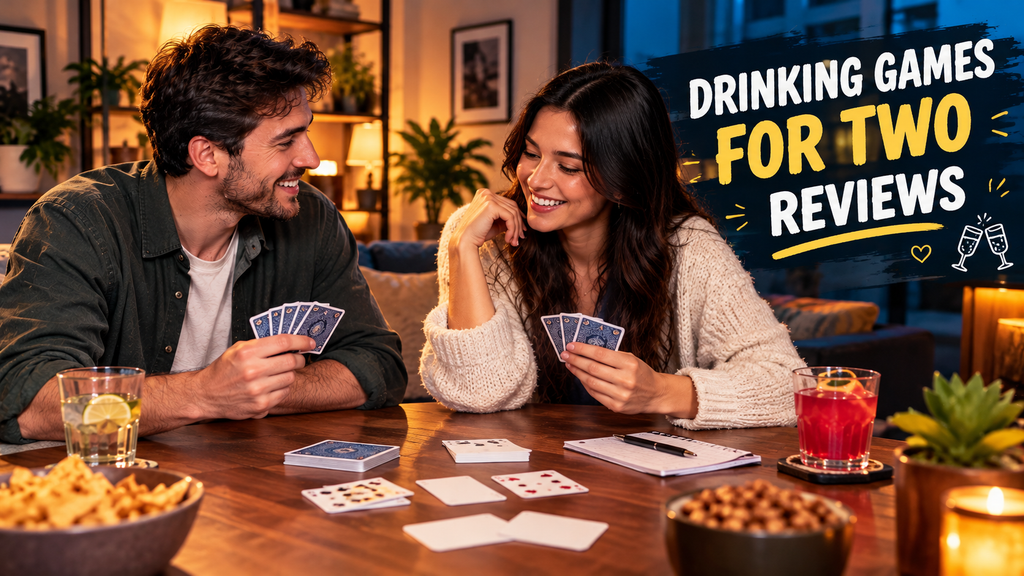
The right game depends on the mood you’re after. A couple looking for conversation may prefer personal questions, while two competitive friends might enjoy trivia or a challenge involving quick thinking.
Consider these factors before choosing:
- Setup: Can you start immediately, or do you need cards, paper, a television, or a prepared question list?
- Interaction: Does the game encourage conversation, quick reactions, guessing, or strategic thinking?
- Replayability: Can you play several rounds without repeating the same questions?
- Comfort level: Does the game allow players to skip personal questions or challenges without explaining why?
- Flexibility: Can you replace drinking with points, sips of a non-alcoholic beverage, or another harmless consequence?
For a first game night, start with something easy to understand. A complicated ruleset can slow down an evening that is meant to be casual. It’s also sensible to agree on boundaries before playing, particularly if questions might touch on relationships, embarrassing memories, or personal experiences.
Seven Drinking Games for Two Reviewed
The following are editorial assessments of familiar game formats adapted for two players. They are not claims of firsthand testing, and the scores are qualitative recommendations rather than measured review results.
Never Have I Ever
Best for: Conversation and discovering surprising facts
How it works: Players take turns saying something they have never done. The other player responds honestly. You can use a point system, ask a follow-up question, or simply let each statement lead to a conversation. In a drinking version, some players traditionally take a sip when a statement applies to them, but that rule is optional and can be replaced with a token or point.
Why it works for two: With a small group, there is no need to wait for several people to respond. Each statement can lead to a story, a joke, or a follow-up question, making this format particularly suitable for people who enjoy getting to know each other.
Strengths
- No special equipment is required.
- Players can choose funny, everyday, or thoughtful topics.
- Rules are easy to change for different relationships.
- Rounds can be as short or long as you like.
Weaknesses
The game depends on both people being willing to share. If the prompts are too personal or one player feels interrogated, the experience can become uncomfortable. Repeating familiar questions also reduces its appeal.
Verdict: A strong choice for couples or friends who enjoy storytelling. Agree that either player can pass on a question without penalty.
Two-Person Trivia
Best for: Friendly competition
How it works: Choose a category such as films, gaming, music, geography, or general knowledge. Take turns asking questions, or use a prepared question list. Award one point for each correct answer. If you want to include drinks, keep that separate from scoring rather than making incorrect answers trigger drinking.
Why it works for two: Trivia gives each player a clear objective and creates a natural back-and-forth. A themed quiz can also reflect shared interests, such as favorite games or movies.
Strengths
- Easy to organize with paper or a question list.
- Scoring makes progress visible.
- Categories can be tailored to both players.
- It works well in short rounds.
Weaknesses
A large difference in knowledge can make the game feel one-sided. Avoid this by mixing easy and difficult questions, alternating categories, and allowing each player to choose a topic. Questions based on obscure facts can also become arguments if nobody has a reliable answer.
Verdict: The best option for people who prefer clear rules and measurable competition. A simple score sheet gives it more structure than an improvised question game.
Truth or Dare
Best for: Humor and creative challenges
How it works: Players alternate choosing truth or dare. A truth question invites an answer; a dare asks the other person to complete a harmless challenge. Set boundaries in advance and allow either player to skip a prompt.
Why it works for two: You can adapt the questions to your relationship and the amount of energy you have. Truth questions can be lighthearted, while dares can involve drawing, acting, impressions, or other silly tasks.
Strengths
- Almost no setup is needed.
- The mix of questions and actions prevents a predictable rhythm.
- Prompts can be tailored to the players.
- It can work as a quick game or a longer activity.
Weaknesses
Poorly chosen dares can become embarrassing, invasive, or unsafe. Avoid challenges involving dangerous stunts, unwanted contact, public harassment, revealing private information, or consuming alcohol quickly.
Verdict: A flexible option when both players enjoy improvisation. The best version creates laughter without relying on humiliation or pressure.
Would You Rather?
Best for: Quick rounds and funny debates
How it works: One player gives two choices, and the other must select one. For example: would you rather explore a mysterious island or visit a city on Mars? After answering, each player can explain their reasoning before switching turns.
Why it works for two: Every prompt gives both people a reason to talk. The questions can be ridiculous, thoughtful, romantic, or themed around movies and games. Unlike games with complex rules, this one can begin immediately.
Strengths
- No equipment is necessary.
- Suitable for short or extended sessions.
- Easy to customize for different moods.
- Encourages imagination and conversation.
Weaknesses
The format can lose momentum if questions are too similar or one player gives only one-word answers. Mix silly choices with questions that invite an explanation, and let each person invent prompts.
Verdict: One of the easiest choices for a low-effort evening. It is particularly good when you want a conversation starter rather than a competitive game.
Card-Based Challenge Games
Best for: Players who want a little structure
How it works: Use a standard deck of playing cards. Before starting, assign harmless actions to selected ranks—for example, a red card means answer a trivia question, a black card means complete a word challenge, and a face card means invent a question for the other player. Draw one card at a time and keep score.
Why it works for two: The deck introduces an element of chance, so players do not need to invent every turn themselves. You can design the rules together, giving the game a personal theme.
Strengths
- A standard deck is inexpensive and portable.
- Rules can be adapted to preferred topics.
- Random draws make each round less predictable.
- The game can combine luck, knowledge, and creativity.
Weaknesses
There is no single universal rule set for a custom two-person card challenge. Players need to agree on the card meanings before starting. If the rules are too elaborate, they can become more work than the game itself.
Verdict: Best for players who enjoy making their own rules. Keep the card actions harmless and use points or challenges rather than mandatory drinking.
Movie or TV Show Bingo
Best for: A relaxed night on the sofa
How it works: Choose a film or show and write down recurring events before watching. For a comedy, the list might include a dramatic misunderstanding, an exaggerated reaction, or a predictable plot twist. Mark an item whenever it happens. The first player to complete a row wins.
Why it works for two: Both players watch the same content, but each can have a different bingo card. That creates a light competition without requiring constant interruptions.
Strengths
- Combines entertainment with a simple game.
- Requires only paper or a notes app.
- Can be customized to a specific genre.
- Works especially well for rewatching familiar films.
Weaknesses
The game requires a suitable movie or episode, and some prompts may rarely occur. If players keep pausing to discuss every event, the viewing experience can become fragmented. Prepare a short list in advance and keep the rules simple.
Verdict: A good pick for people who want an activity that does not demand their full attention. It also works perfectly with non-alcoholic drinks.
Word Association
Best for: Fast thinking and spontaneous humor
How it works: One player says a word, and the other responds with the first related word that comes to mind. Continue alternating. To add structure, choose a theme, set a short response limit, or award points for original answers. Players can also take turns naming things in a category without repeating previous answers.
Why it works for two: The rules are immediate, and the game can become surprisingly funny when the associations grow unexpected. A themed version can focus on gaming, films, food, travel, or shared memories.
Strengths
- No equipment or preparation is needed.
- Rounds can last a minute or an entire evening.
- Easy to make competitive or cooperative.
- Works well as a quick break between other activities.
Weaknesses
Players who prefer strategic games may find it too loose. Without a theme or scoring system, it can also feel repetitive after several rounds.
Verdict: The simplest choice on this list. Add categories or a points system if you want more structure, but leave the rules flexible enough to keep the pace moving.
Comparison Table: Which Game Fits Your Evening?
| Game | Best for | Equipment | Competitive level |
|---|---|---|---|
| Never Have I Ever | Personal stories | None | Low |
| Two-Person Trivia | Knowledge and rivalry | Questions or paper | High |
| Truth or Dare | Creative challenges | None | Medium |
| Would You Rather? | Conversation | None | Low |
| Card-Based Challenges | Custom rules and variety | Playing cards | Medium |
| Movie or TV Bingo | Relaxed entertainment | Screen and optional paper | Low |
| Word Association | Quick thinking | None | Medium |
These ratings describe the general format, not an objective performance score. The best choice depends on what both players find enjoyable.
For the easiest start, choose Would You Rather? or Word Association. For a more personal evening, try Never Have I Ever. If you both like competition, trivia offers the clearest way to track a winner.
Tips for a Fun, Comfortable Game Night
A two-person game night works best when the rules are clear and neither player feels pressured to participate in something uncomfortable. A few small decisions can make a noticeable difference.
Agree on the rules before the first round. Decide how turns work, how points are awarded, and when a round ends. If you’re adapting a familiar game, write down any custom rules so both people understand them.
Keep drinking optional. Don’t make drinking a requirement for answering questions, losing a round, or refusing a challenge. Use points, tokens, funny sound effects, or a harmless task instead.
Set personal boundaries. In games involving personal questions, either person should be able to pass. Avoid prompts that demand private information, reveal someone else’s secrets, or make a player feel pressured to discuss an uncomfortable subject.
Choose a comfortable pace. If alcohol is involved, don’t turn the game into a race or use rapid-fire penalties. Alcohol affects judgment and coordination, and its effects can become stronger than expected. Taking breaks, eating, and having water available are sensible precautions, but they do not make heavy drinking safe.
Don’t mix drinking with driving. Anyone who has consumed alcohol should not drive. Arrange a sober ride or stay where you are.
Change games when the mood changes. A lively trivia session may be perfect at the start of an evening, while a slower conversation game may be better later. You don’t have to finish a game simply because you started it.
Alcohol-Free Ways to Play
You can preserve the social element of these games without alcohol. In many cases, the alternatives make the rules fairer because both players can participate at the same pace.
- Use a points system: Award a point for correct trivia answers, creative responses, or completed challenges.
- Try a token system: Give each player five tokens. Spend one to skip a question, request a hint, or pass a challenge.
- Choose a mystery drink: Prepare two or three non-alcoholic drinks and let the winner choose which one to try.
- Use mini-challenges: A losing player might draw a silly picture, invent a movie title, or perform a harmless impression.
- Create a cooperative goal: Instead of competing, see how many trivia questions you can answer together or how many bingo squares you can complete during a film.
These options also make the games more inclusive when one person doesn’t drink, is taking medication that interacts with alcohol, is driving, or simply doesn’t want alcohol that evening.
Common Mistakes to Avoid
Even simple games can become frustrating when the rules or expectations are poorly handled.
Making every mistake a drinking penalty: This shifts the focus away from the game and can encourage unsafe consumption. Use points or harmless consequences instead.
Choosing overly personal questions too early: Start with funny, everyday prompts. Let both players decide whether they want to discuss more personal subjects.
Making the rules too complicated: A home-made card game with dozens of special cases can slow everything down. Start with three or four rules and add more only if needed.
Ignoring the difference between players: One person may enjoy trivia while the other prefers storytelling. Choose a game you can both enjoy, or alternate between formats.
Treating a winner as the only goal: In a casual two-person setting, good conversation and shared laughter may matter more than keeping score. Cooperative rules can be more enjoyable than competition.
Final Verdict
The best drinking games for two are not necessarily the ones that involve the most drinking. They are the ones that give two people an easy reason to talk, laugh, compete, or try something different.
For conversation, Never Have I Ever and Would You Rather? are excellent starting points. Two-Person Trivia suits players who enjoy competition, while Card-Based Challenge Games offer more customization. Movie or TV Show Bingo is ideal for a relaxed night, and Word Association is a simple choice when you don’t want to prepare anything.
Start with one game, keep the rules straightforward, and allow either person to skip a prompt or stop whenever they wish. Alcohol is never necessary for a good game night, and it should never be the price of participation.
FAQ
What are the best drinking games for two people?
Never Have I Ever, Would You Rather?, Truth or Dare, two-person trivia, and card-based challenges are flexible options. The best choice depends on whether you prefer conversation, competition, or creative tasks.
Can you play drinking games with just two players?
Yes. Many familiar party-game formats work with two people. Trivia, question games, word challenges, and custom card games are particularly easy to adapt.
What is an easy drinking game for couples?
Would You Rather? is a simple starting point because it requires no equipment and encourages conversation. Couples can choose funny, romantic, or everyday questions and skip anything that feels uncomfortable.
Are there drinking games for two that don’t require cards?
Yes. Never Have I Ever, Truth or Dare, Would You Rather?, and Word Association require no cards or special equipment. You can start playing immediately.
Can you play these games without alcohol?
Absolutely. Replace drinking rules with points, tokens, trivia questions, or harmless mini-challenges. The central activity—conversation or competition—works without alcohol.
How do you make a two-person game night less awkward?
Start with lighthearted topics, choose games with simple rules, and let each person pass on questions. Shared interests, such as films, music, or gaming, can make it easier to find prompts you both enjoy.
Are drinking games safe?
Games that encourage rapid or excessive alcohol consumption can lead to alcohol poisoning, impaired judgment, and injuries. Avoid drinking penalties, never pressure anyone to drink, and don’t drive after consuming alcohol. The safest option is to play with non-alcoholic drinks.
What should you prepare for a two-person game night?
Most games need very little preparation. A deck of cards helps with custom challenges, paper is useful for trivia and bingo, and a prepared question list can keep conversation games moving. Water and non-alcoholic drinks are good options to have available
LEAVE A PIXEL ZINE COMMENT